-min.avif)
Register for FY25
Full-Year Financial and Programmatic Results
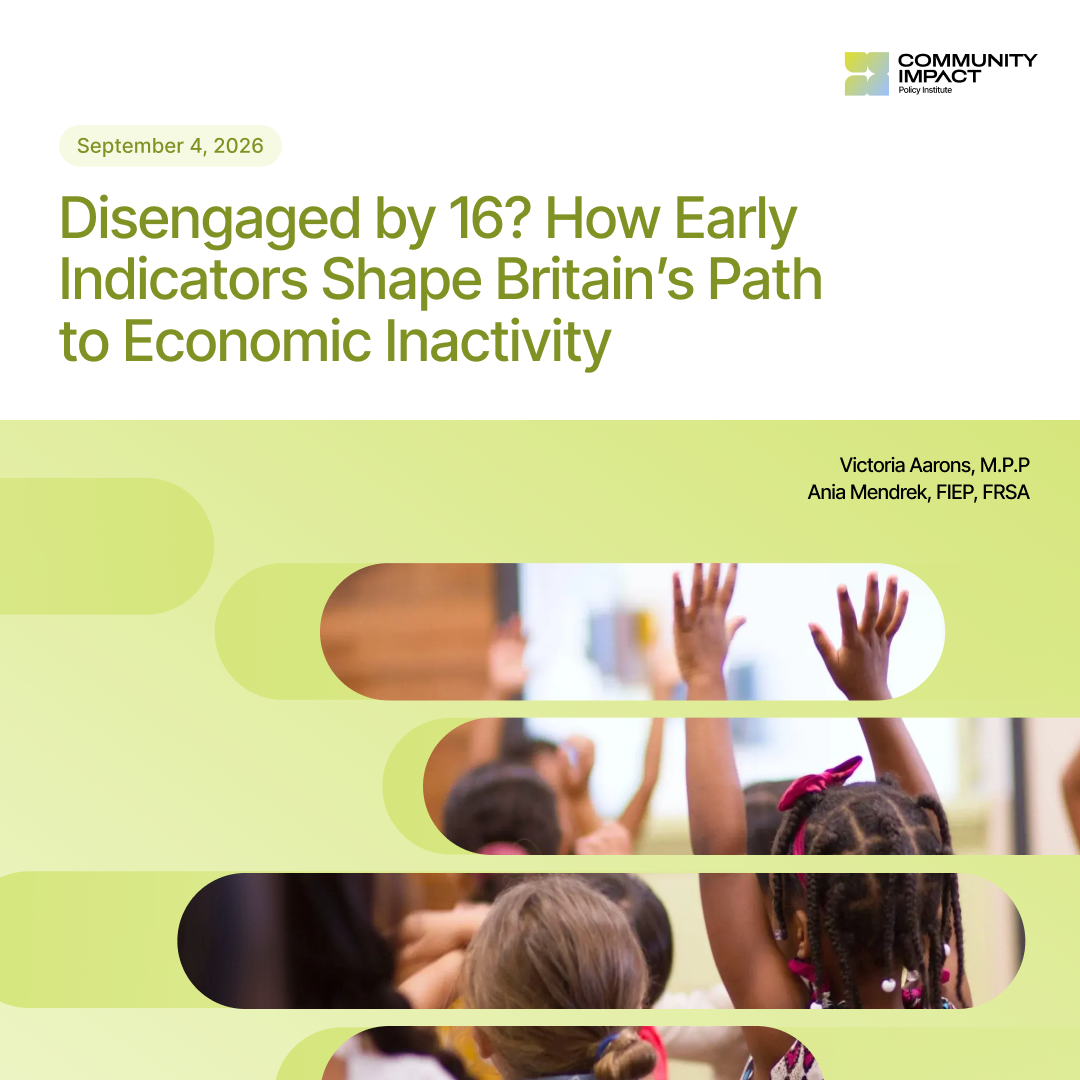
Disengaged by 16? How Early Indicators Shape Britain’s Path to Economic Inactivity
No items found.
New research from the Community Impact Policy Institute finds that the path towards economic inactivity is visible in childhood, years before the labour market comes into view. Drawing on national data and two Fedcap case studies, Big Picture Learning Doncaster and The New School in Croydon, the paper traces how three linked signals, belonging, attendance and attainment, accumulate and reinforce one another long before a young person becomes NEET. Around 485,000 children aged 10 to 15 often feel lonely, persistent absence now affects more than 1.6 million pupils, and fewer than half reach a grade 5 in English and Maths at sixteen, with the gap between disadvantaged pupils and their peers wider now than before the pandemic. Yet England's principal screening tool for NEET risk does not begin until Year 10 or 11, by which point the trajectory is largely set. Disengagement, the paper argues, is a pathway rather than an event, and one most effectively and most affordably interrupted in the pre-GCSE years. It sets out five recommendations, led by earlier intervention while pupils are still in school and the embedding of mental health and wellbeing support as core educational infrastructure rather than a referral made once a young person is already in crisis.
Recent Posts